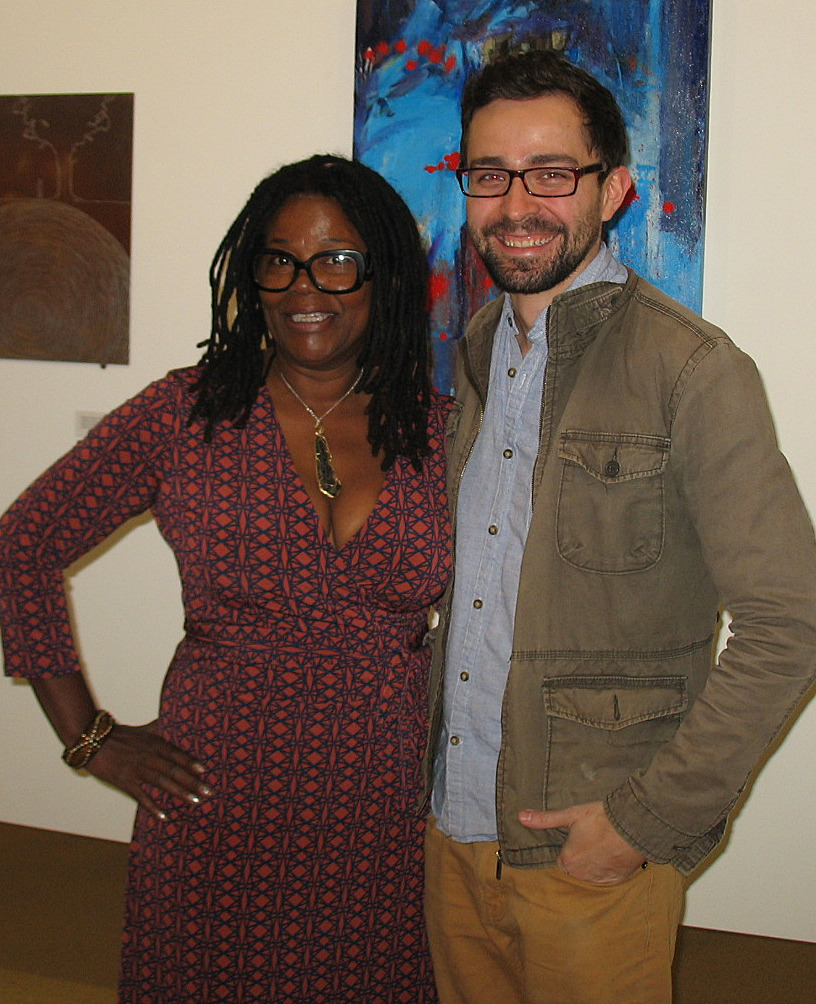
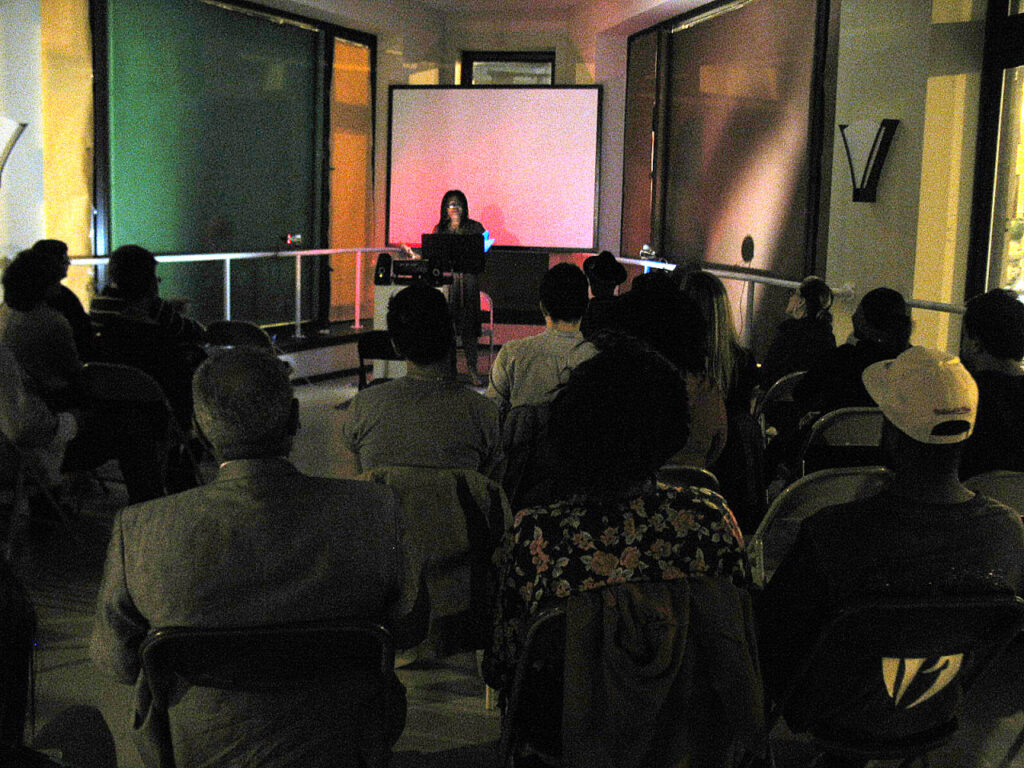
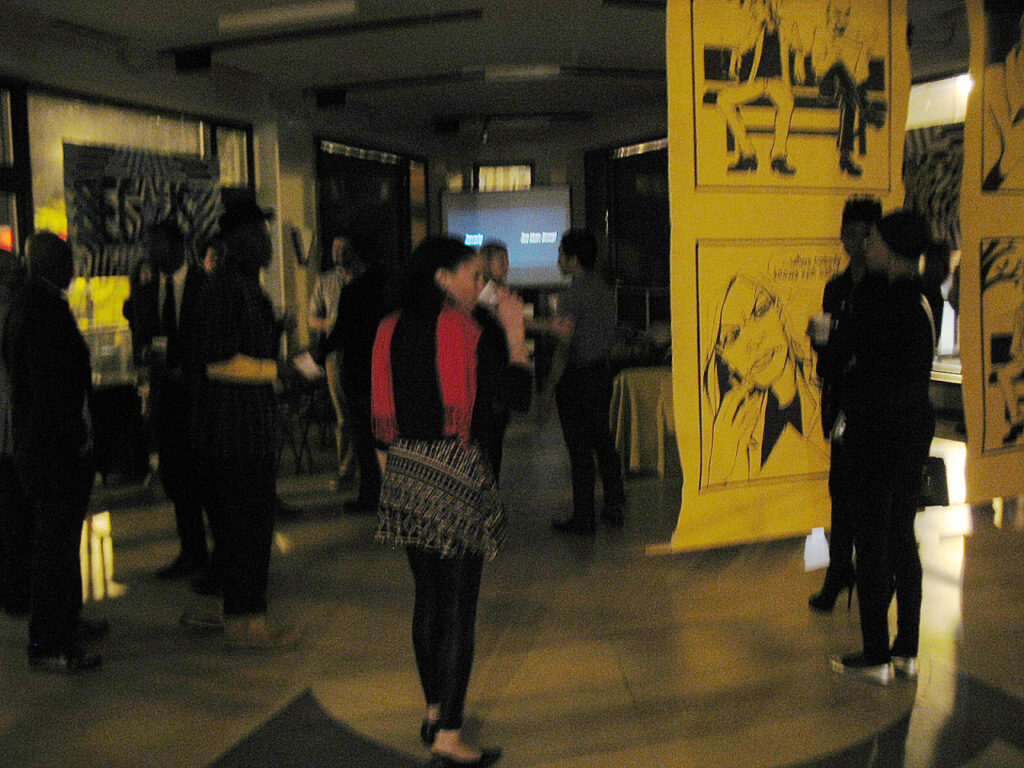
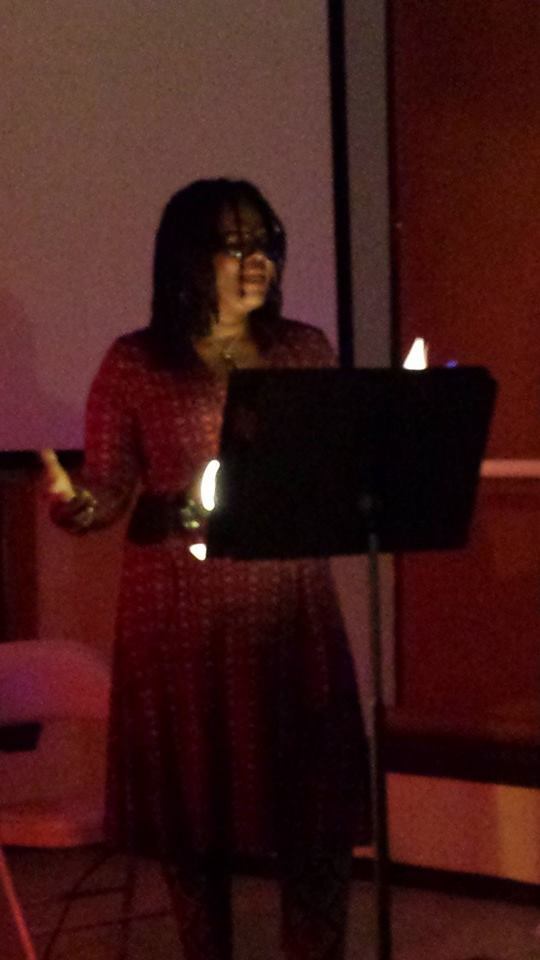
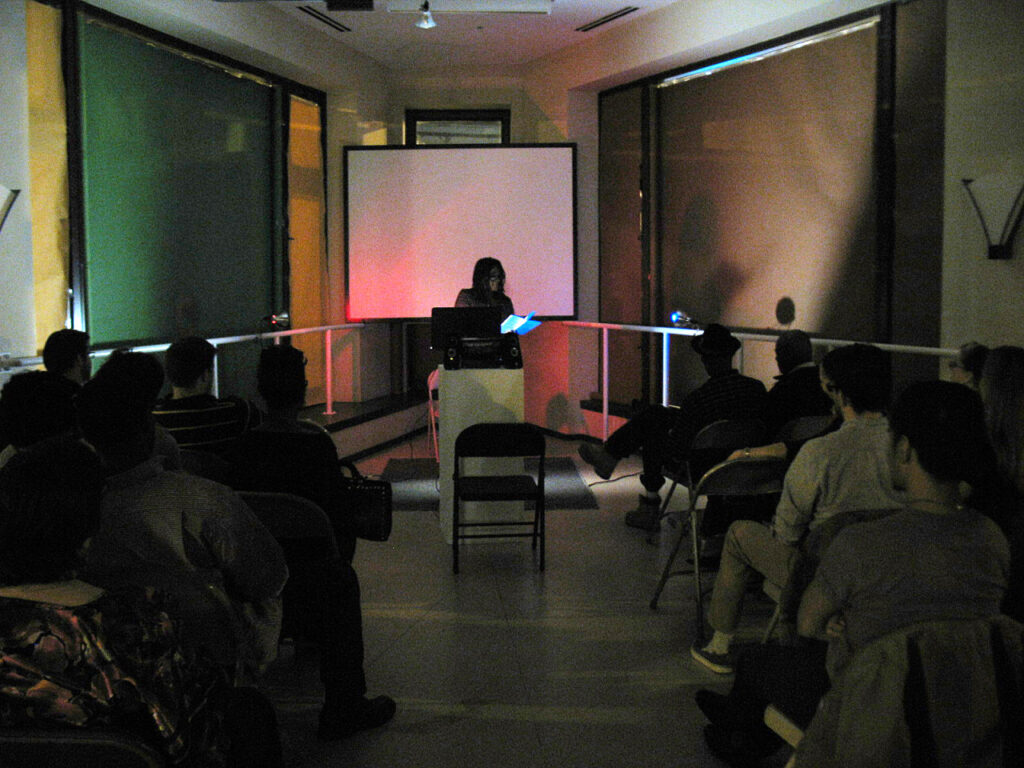
What a powerful and wonderful event on Saturday. Thanks to Beverly Reed Scott for sharing the first installment of her new book and Eliaz Rodriguez for sharing his film “Beverly” and new film “Tea Man, Steep!”
We were excited to include this reading and screening as one of our AnySquared Residency programs this month at the Hairpin Arts Center!
An Intimate Reading & Screening: Films by Eliaz Rodriguez & Reading by Beverly Reed Scott (Oye’)
Saturday October 25 Begins promptly at 7pm and ends at 9pm Hairpin Arts Center, 2810 N. Milwaukee Event is free.
This special event features AnySquared’s Cinema Minima Residency’s “Best-In-Show” filmmaker Eliaz Rodriguez. He will screen his film “Beverly” — based on Beverly Reed Scott’s essay “I Do But Do He” — and his new rough cut film “Tea Man, Steep!.”
We are also excited to showcase our Cinema Minima essay winner and gifted writer Beverly Reed Scott (Oye’) as she reads from her new memoir “My Perilous Journey #1 Vol. 1.”
Beverly (4:16) Directed, Screenplay & Edited by: Eliaz Rodriguez. Story by: Beverly Scott Synopsis: Beverly is wrapped up in her thoughts as she strives to land the man she deserves. Starring: Wanjiku Kairu, Jeremy Solomon, and Matthew Stromer.
Tea Man, Steep! (Rough-cut, 12:00) Directed & Edited by: Eliaz Rodriguez. Written by: Eliaz Rodriguez & Jeff Phillips Synopsis: Caleb found his passion in life, tea, and he attempts to acquaint his friends and coworkers with this love. Starring: Jeff Phillips, Donny Rodriguez, and John Piotrowski.
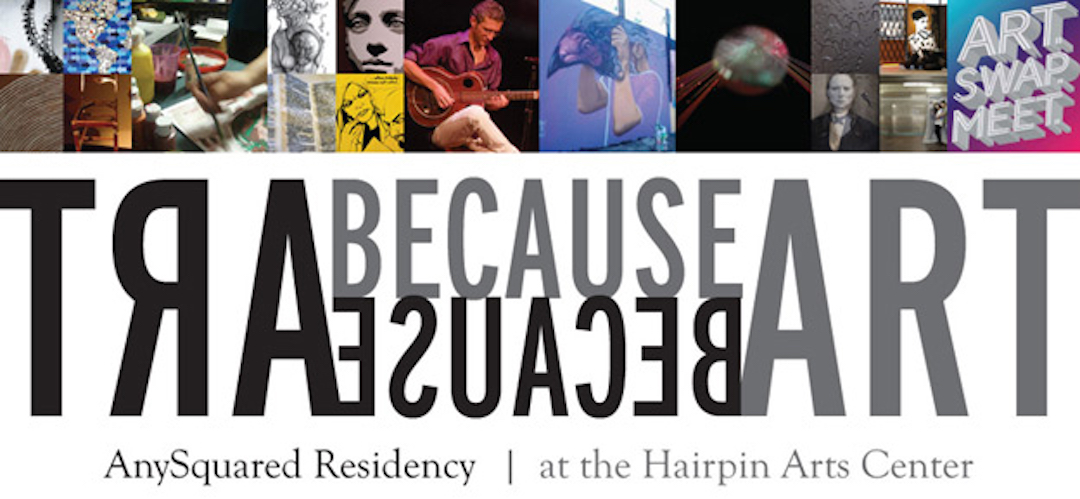
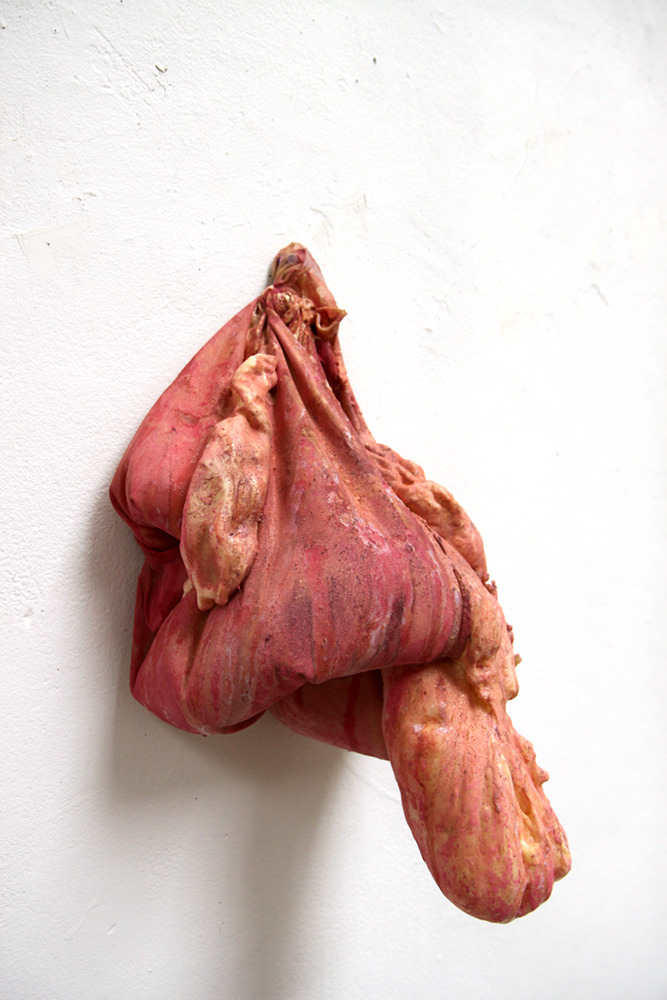
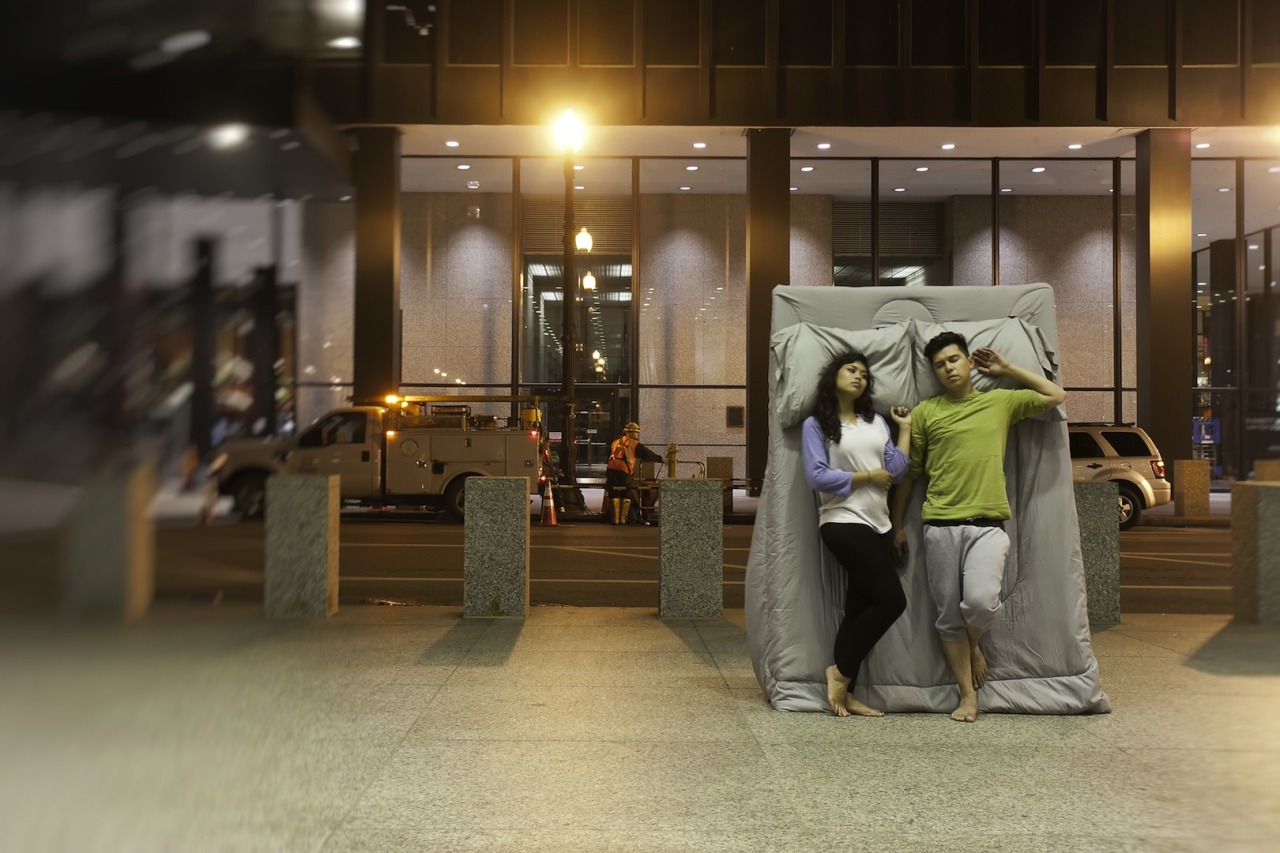
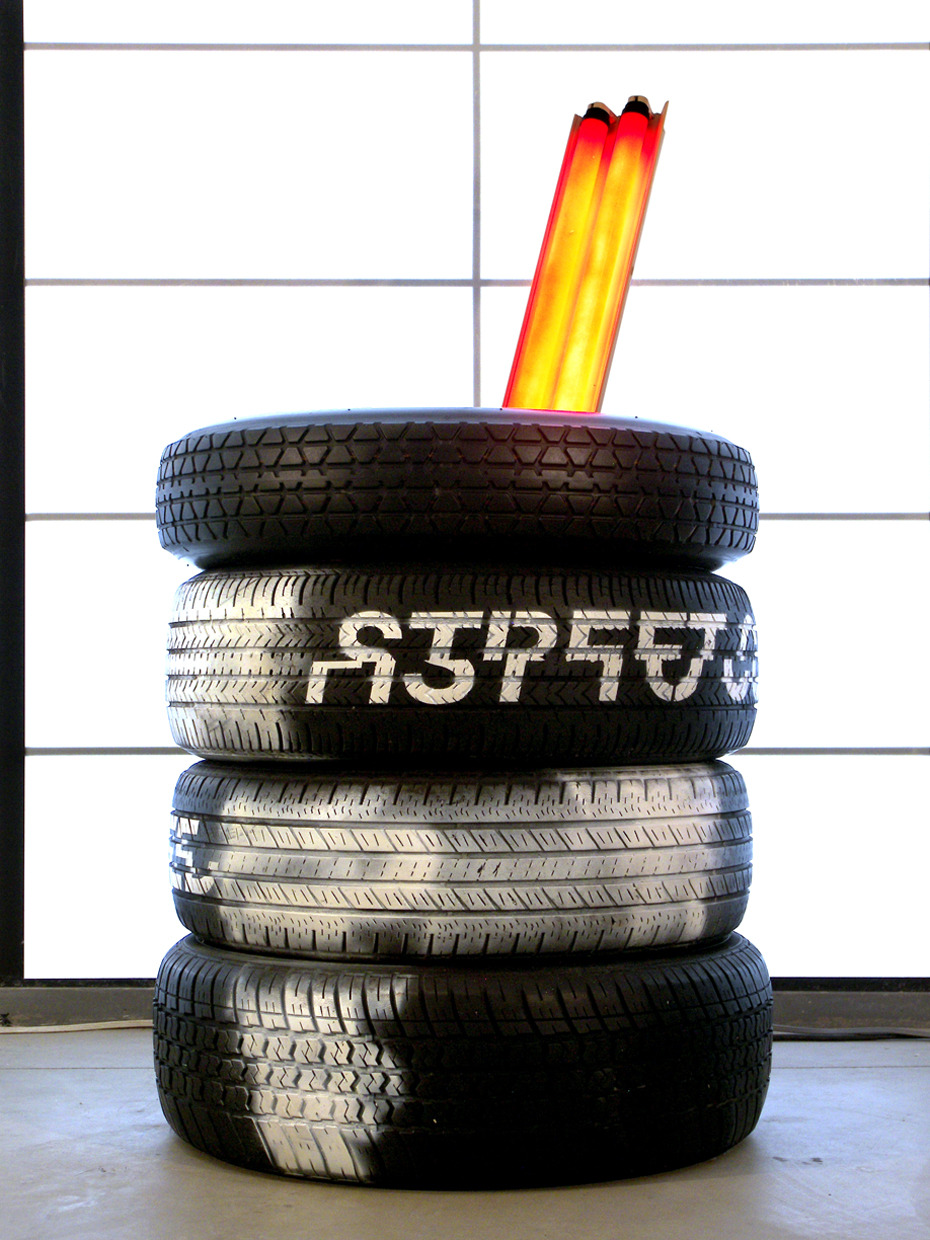
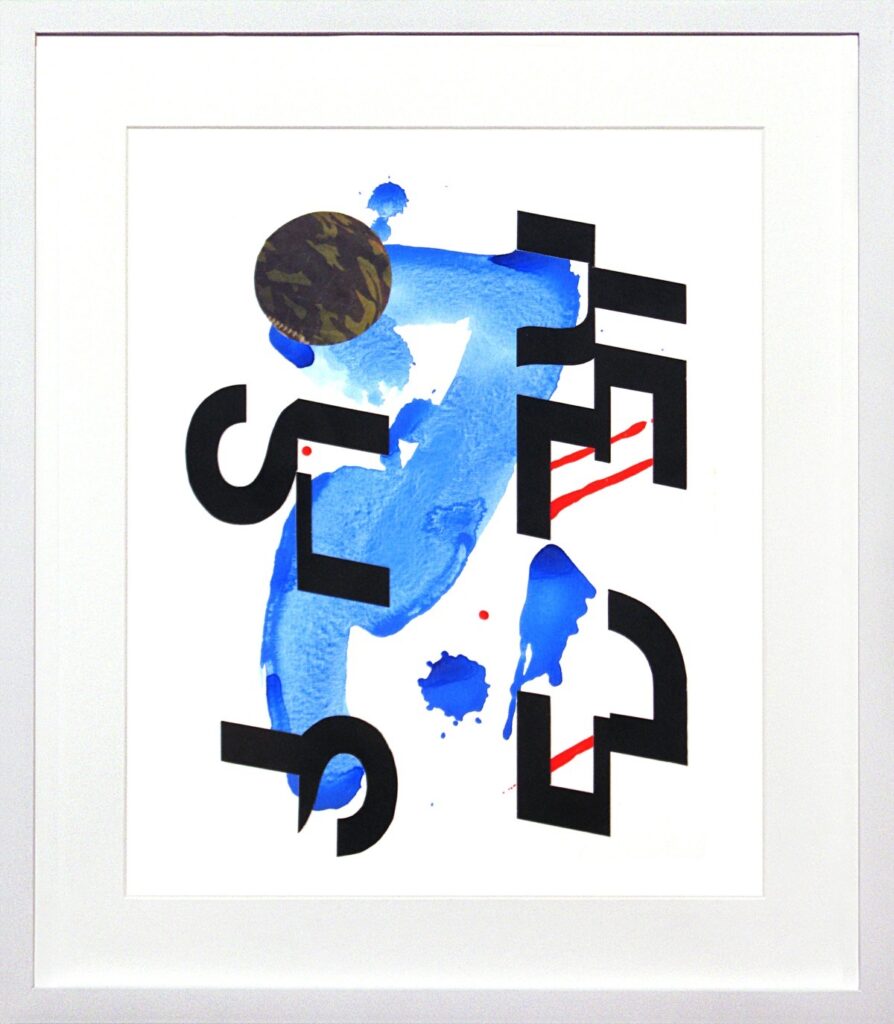
Please also see our “Because Art” exhibit at the space before the event – doors open at 6:15pm.
___
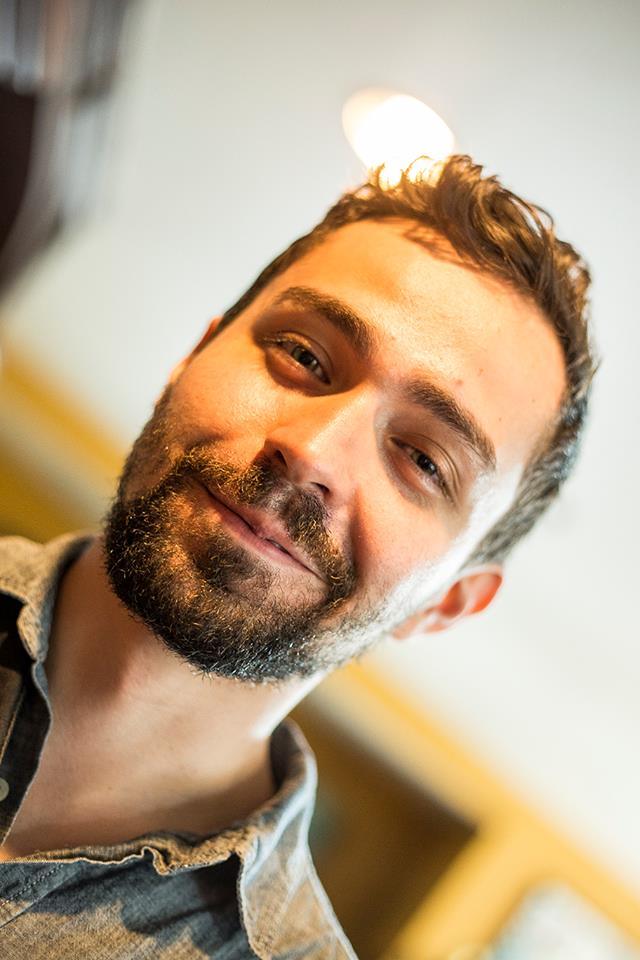
Eliaz Rodriguez is a self-taught filmmaker from Chicago. In 2008 he co-created the comedy group Wood Sugars and over the next five years produced/directed hundreds of films, web series, podcasts, and live comedy shows. In October of 2013 he made his first solo short film, an adaptation of a true story entitled Beverly, which went on to win Best In Show of the Cinema Minima Residency and Best of Fest of the Indie Incubator Film Fest. Eliaz can also be heard weekly on segments of the podcast he engineers, named CinemaJaw – the greatest movies podcast ever.
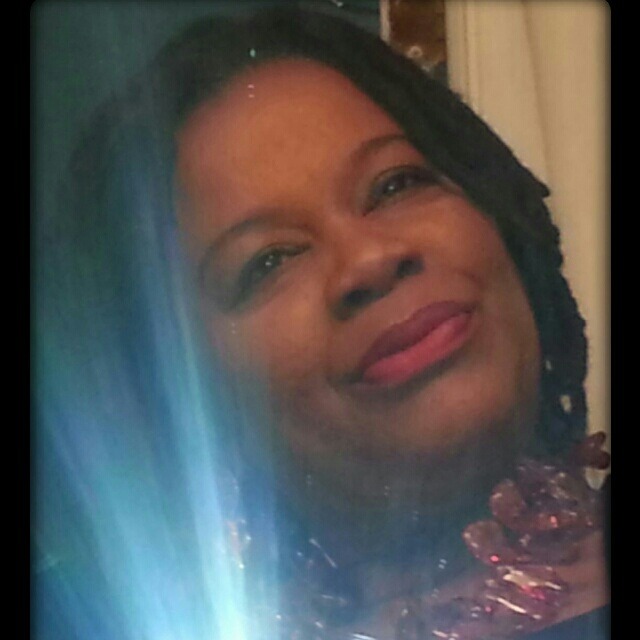
Beverly Reed Scott (Oye’) is a gifted writer and fierce activist. Her prose, poetry and messages are conjured from her soul and her rhythmic alignment with nature. She is a natural storyteller, trained in Original Voice Technique by Dr. Clarissa Pinkola Estes, Jungian Analyst and bestselling author. Her voice is colored by her experiences, having been born, raised in Englewood during the 60’s and 70’s, her coming of age tales are wrought with anguish, joy, love and pain. She is publishing her memoir as a serial and will read from My Perilous Journey #1 Vol. 1.
Thanks FLASH ABC and BboyB for the history of art and hip hop in our neighborhood! Plus, seeing ABC’s Project Logan Mural progression through time was great too!
We were excited to include you in AnySquared Residency programs this month at the Hairpin Arts Center!
Join us this Thursday at the Hairpin Arts Center for an Slideshow presentation by ABC (Artistic Bombing Crew) showing the history of the ever-changing Project Logan Mural at Fullerton and Milwaukee.
Exhibit | Oct 10 – Nov 2AnySquared’s Because Art Opening and Residency PhotosArt Swap Event PhotosOnline Publication | BecauseArt ___________ Public Events | 2810 N. Milwaukee Avenue, ChicagoAnySquared’s Residency at the Hairpin Arts Center is activating their space as we encourageartists and community participation with exhibitions, workshops, talks, artmaking days, “ART + Community” events, performance, … Read more
What does it mean to be an artist? An artist is one who lives a creative life. A creative life is when one creates something where there was nothing before.
What is the function of art? The function of art is to give oneself, or others, deeper insight and meaning into the world around them.
What is more important to you, the process or the result? The result is based on the process. The end result is what is witnessed and should communicate an idea effectively, hopefully the idea for which the artist was aiming.
Do you label yourself as an artist? After many years of labeling myself a “painter”, I finally feel I can label myself an artist. I now recognize that I do create something where there was nothing before. I realize now I have the ability to effectively communicate, through a visual means, an idea that can give deeper insight and meaning into the world around us.
What does it mean to be an artist? I think being an artist means having a perspective and being able to manipulate things in the world to present it as best you can.
What is the function of art? If you’ll accept a Sunday-school answer: beauty. As far as I can tell, the choices are to waste and consume or to create, add something to the world, and move culture forward. The function of art is to counter waste, destruction, and awfulness with beauty.
What is more important to you the process or the result? The process, doing art, for me, is being part of the solution. It’s something I have to do, but it doesn’t mean much unless someone else sees what I do and is, I hope, moved by it. That being the case, I’d say the result is more important.
Do you label yourself as an artist? I’m learning to.
What does it mean to be an artist? I can only answer for myself—being an artist composes of constantly absorbing, observing, and reacting to my internal and external worlds and then morphing that source material into something that is entirely outside of myself. Although artmaking is deeply personal, it is important that the work is distanced from me in order to function as an autonomous entity. There is a point in the making process at which I, as an artist, am mastered by the piece and I only exist to serve its needs. An artist could be defined as one who has such a relationship with their work.
What is the function of art? Art as a category is functionless. Having a function implies some sort of inherent motive or reason for existence. However, art can do many things—change our perceptions, call for political action, improve a community, represent a culture, make us feel a range of emotions from outraged to enamoured. Art can be used as a tool to fulfill a means or simply exist in a space. These roles exist solely as possibilities and not expectations, which is why I would argue that art is functionless.
What is more important to you — the result or the process? The result and the process are two inseparable terms for me, or rather the result is a part of my process. I rarely find myself completely finished from work; even if I can no longer physically change the result of my labor, I continue to understand the work in repeatedly shifting ways. Certain finished pieces will spontaneously pop up in my mind as I am creating. Finished works act as additions to a library which I can reference and reinterpret as needed. Even works that feel detached from my overall practice often find themselves in conversation with the rest of my oeuvre and serve as potential solutions to questions I often ask in my practice—how can I abstract the social or how can I transform a commonplace material into a complex bodily surface for the organism that is my sculpture? I would thus say that the process is more important to me.
Do you label yourself as an artist? Yes, I do. Accepting this label has been a result of increasing confidence in my work and in my own identity. As a student, I could avoid the label—I was not an artist but a Visual Arts major. My work answers to homework prompts. The stakes for making good work were very low. However, as I invested more of myself into my work, the stakes felt raised despite nothing else having changed. At the end of my undergraduate courses, my expectations for my work rose from making good student work to making good artwork. It was at this moment in which I routinely and comfortably could refer to myself as an artist. Now, as an artist without attachment to an institution and with no real artistic obligations, I continue to be driven by my reflexive expectations. That my drive has not evaporated with the disappearance of these obligations has solidified my identity as an artist.
In the book Rooftop Soliloquy, Roman Payne writes, “…all forms of madness, bizarre habits, awkwardness in society, general clumsiness, are justified in the person who creates good art.” To a degree I think this is true, if for no other reason than its acknowledgement that society allows artists to break social norms because it’s understood art will allow us to see things in a new way.
Arts function is to take both extremes as well as the mundane of existence and present it in a way that offers some sort of commentary or inspires new thought. It’s for this reason the “bizarre habits” and “awkwardness” are condoned, understood, and sometimes embraced.
While it’s easy to romanticize the value of the process – embracing the journey rather than the destination – for me the essential factor in art is about the actual creation of something and that goal is not reached until the end. The process becomes an important factor over a period of time of the development after many different pieces – recognizing how that has changed to reach finalized goals.
I don’t label myself an artists but rather as a creative person who associates with other creative people. I’m sure in using the word “goals” would rub some the wrong way, but all the art I create – in music, photography, etc. – is not tangible until something is complete – until there is something to show. Prior to that, it’s only an idea. Because my friends and I are artists (if we consider ourselves such or not) we do everything we can to see our ideas into realization.





 EVENT
EVENT